To Light the Lantern: Power Revealed, Power Concealed — A Reading of Zhang Yimou's Raise the Red Lantern
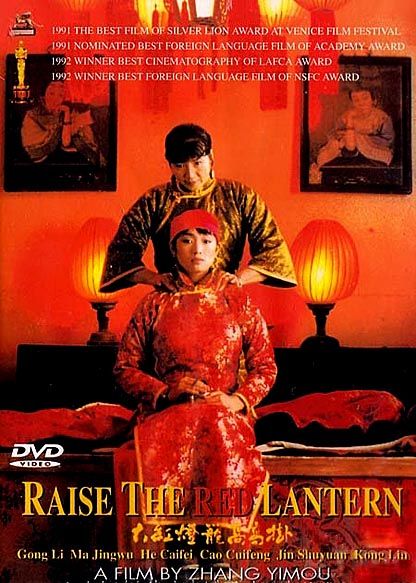
I watched Raise the Red Lantern by Zhang Yimou by chance and found "to light the lantern" particularly interesting. It resonates with a project I am currently developing, which also includes the gesture of lighting a lamp — and we are both using this gesture to symbolize the exercise of power.
I believe every Chinese person, no matter which social class or economic background they belong to, inevitably lives under the veil of power. This is very different from what I have seen in Western society. This does not indicate there is no hierarchy and Informal norms in the Western world, but rather that power is exercised in a different way. In Western democracies, every social issue risks turning into trench warfare, getting bogged down in debate, while in China, policies can often be implemented without visible public opposition. I have no intention here to discuss which is better, but rather to point out the reason behind this phenomenon.
In Western society, power is usually exercised through clearly defined agents — such as governors and members of parliament — and supported by written texts, most importantly laws. Every agent can execute their power, or be questioned over the execution of that power, based on black on white. So inevitably we see members challenging every decision the government makes, because they are empowered to do so, and they can only do so within that framework. If we shift our gaze to China, we can see a comparatively low-text society, which means that black on white is an existing but not a predominant way of doing things.
Zhang Yimou, in this film, employs a distinctly Chinese way to depict the exercise of power — to light the red lantern means to be chosen for the night. This brings me back to what I said at the beginning: Chinese people live under the veil of power, while Western people live under the light of power.
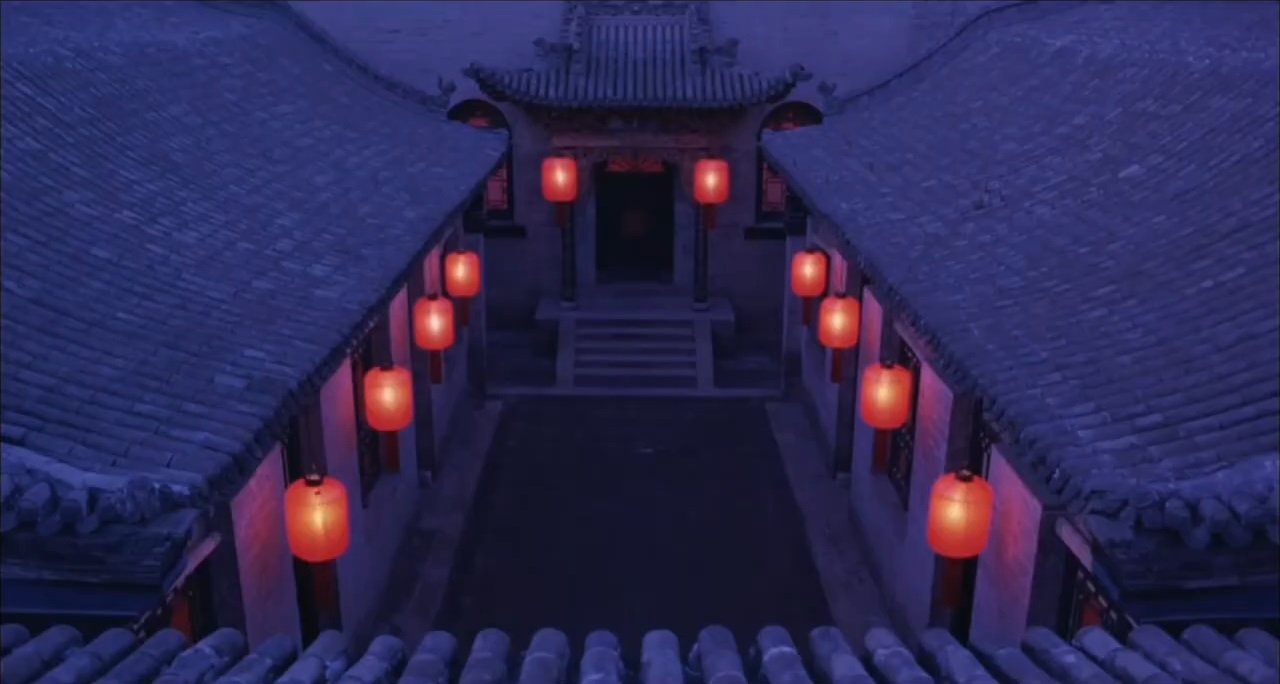
In the film, the authority of the patriarch operates largely under this veil. It is absolute, unquestioned, and conveyed through ritual, hierarchy, and symbolic acts rather than formal laws or open debates. The light of the red lantern makes the patriarch's favor visible while maintaining the invisibility of the power structure itself. Similarly, the absence of any frontal presentation of the patriarch reinforces the impression of a ubiquitous, faceless power — just as the saying goes: power is most potent when it is latent.
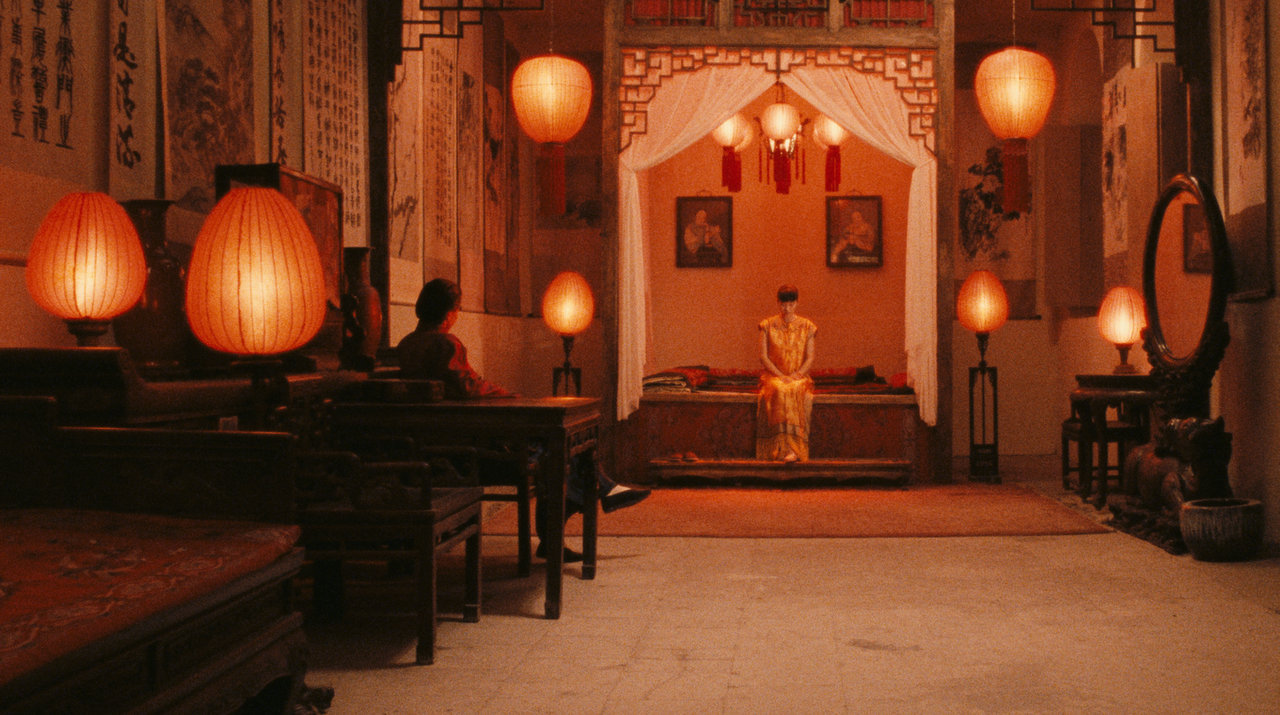
This implicit use of ritual and symbolic acts to embody hierarchy is essentially very artistic, because the struggle between the limitations of content and the medium of expression is the key condition for the emergence of true art. The hidden power structure creates, almost involuntarily, a kind of pressure vessel — and art finds its most distinct outlet precisely within that pressure. In this sense, the Chinese may be the people most naturally inclined toward art, for they have long been accustomed to expressing within constraints, to reaching through implication, analogy, and symbolism toward what cannot be spoken directly. This is entirely in keeping with the very condition from which true art emerges: meaning grows in the tension between the boundaries of form and the weight of what needs to be said. Zhang Yimou successfully seizes this intensity by weaving the power relations of traditional Chinese society into a highly ritualistic and symbolic form, transforming political constraint into aesthetic language. The purpose of art, after all, is to express those things that cannot be said.
***
An Era with No Critics? — On Alex Ross's The Rest Is Noise
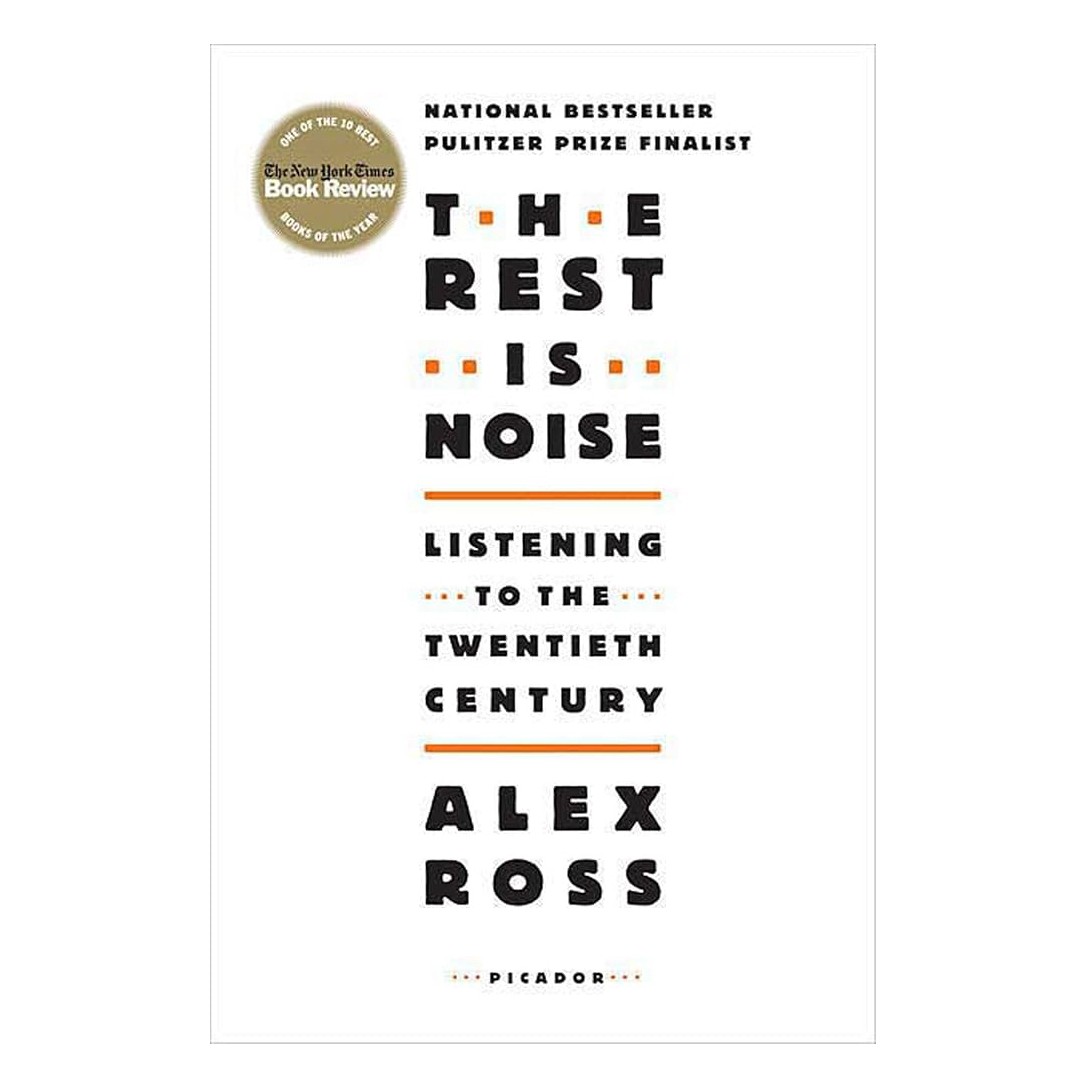
When people write about history, inevitably through the filter of review, they tend to condense the daily routines of countless nobodies into the buzzing noise surrounding a few big names. As a result, the art and music history of the twentieth century often appears like a turbulent and unpredictable theatre, where everyone’s fate seems written in clear characters. Figures from that century look like as if they are carrying lances and riding against windmills.
Reading this history feels more exciting than being immersed in the twenty-first century. What excites me are the confrontations—between ideas, opinions, and debates—while what feels dull today is the dominance of accommodation, monologue, and consumability.
Visual art has been closely tied to power since its origins, and this relationship has intensified in the twenty-first century. Algorithms have seized and shaped our attention and judgement. Each day, images and videos flood our screens, accompanied by likes, tags, and emojis that replace genuine commentary. Outside professional or media-related contexts, few people now spend time reading long-form texts, and fragmented time further weakens sustained thinking.
Social media makes it easy to generate waves of attention, which platforms then amplify in return. This creates the impression that algorithms have become the judges of artistic value. Unlike music, visual art is historically rooted in power structures, and within those structures, economic motivation plays a central role. It is therefore no surprise that algorithms favour content that is predictable, repeatable, and easily consumed.
This is why traditional criticism struggles within the ecology of social media. Introducing unfamiliar or destabilizing ideas runs against the platform logic. No matter how much we mourn the past, the era in which one artist or one style could reign supreme is over. Turmoil like the premiere of The Rite of Spring is unlikely to happen again, and declarations like Pierre Boulez’s—claiming all other paths as dead ends—would today be dismissed as absurd.
The silence of critics, or more broadly the disappearance of speculation, has been subordinated to moral self-censorship driven by the fear of economic loss, a tendency amplified by social media. This raises a question: beyond social media and mass-economic events such as art weeks or design weeks, is there still space for a critical function, even if it no longer takes its traditional form?
I believe there is. Taking Milan Design Week as an example, Alcova occupies such a position. Among many Instagrammable, commercially oriented exhibitions, Alcova’s curatorial focus on craftsmanship, prototypes, unfinished works, and social topics renders its images less immediately “understandable,” but more distinctive. Notably, its social media responses are far less heated than those for more familiar, easily legible objects. Yet this contrast reveals the vitality of Milan Design Week as an ecosystem—one that allows both commercial platforms and spaces where alternative values can persist.
So, returning to the question: an era with no critics? If criticism means one school decisively prevailing over another, then perhaps that era has ended. But this does not mean the end of criticism itself, only the end of its old theatrical form. Today, criticism survives in curatorial decisions, in sustained preferences, and in the refusal to become fully legible or easily consumed. Rather than speaking louder, it operates by slowing things down, insisting on friction within a system designed for smooth circulation. It no longer rules the stage, but quietly alters the conditions under which something can still matter.
***
Ciao, Frankie

I am not a fan of Frank Gehry—actually far from it. The Disney Concert Hall in LA and the LVMH Foundation in Paris are the only two places I’ve visited. I was a student when I first saw the Disney Concert Hall and was completely taken in by its exterior aura— until the moment I stepped inside. The same shock hit me again when I walked into the LVMH Foundation in Paris last year. His cramped, contradictory interiors are like the “three-inch golden lotus” of the old Chinese women—seemingly refined on the surface, yet hiding a suffocating constriction imposed by power.
Sadly, I’ve always believed architecture is a profession that should demand the deepest empathy for people. But the ruling class of this profession is made up of men who favor the higher, the bigger, the grandeur, the better— especially old men who are unable to erect the thing between their legs so instead they dream of erecting something else.
***
What Is “Non-Mainstream Art” in the Age of Algorithms? — On Fangyan/Yimin's Options of the times - Value investment in art
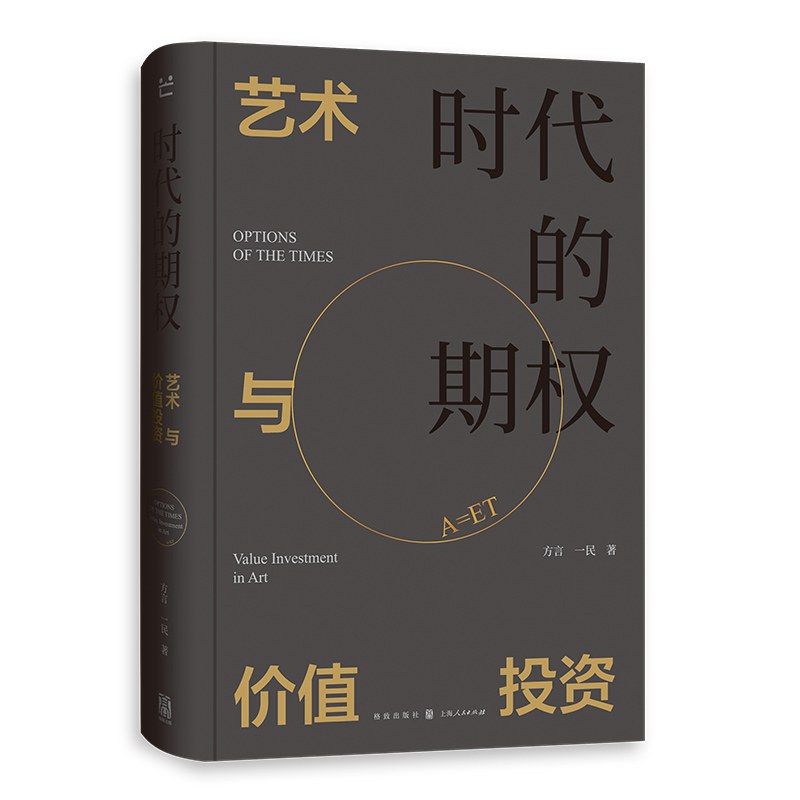
Late this year, following a blogger's recommendation, I picked up this book: Options of the Times: Value Investment in Art. The author encourages investors to discover non-mainstream (or anti-mainstream) artists. This logic might have held up a few decades ago, when communication channels were limited, the art world was relatively self-contained, and niche avant-garde voices could easily find resonance and form a genuine "non-mainstream." But today, before we can even begin searching for the "non-mainstream," shouldn't we first ask what actually counts as "mainstream" in our time? Is it a shark preserved in formaldehyde, a stainless-steel rabbit, or a banana taped to a wall?
In the past, the mainstream was defined by critics, art academies, and art associations. But now—who holds the power to define it? Is it the algorithm? If so, then today’s top artists, like Jeff Koons or Takashi Murakami, may soon find themselves sealed away by history, precisely because they are the ones who attracted the most traffic.
So what, then, are the criteria for identifying the next rising stocks? It certainly can’t be style anymore. The value of art does not lie in aesthetics, nor in aligning with the taste of a particular era—or any era. Nor does it lie in inventing new forms. These are merely additional values.
As Heisenberg wrote in Why I Chose Physics Instead of Music, “The path of modern music seems to have been determined by a purely negative assumption: that the old tonality must be abandoned, not because there are new and more powerful ideas which it cannot express, but because we believe its strength has been exhausted.” Modern art has followed much the same path — driven by a defiant urge to destroy: to break rules, to overturn tradition. But this logic now seems to have reached its end. When everything has already been broken, when the shark, the rabbit, and the banana have all had their moment on stage, what is there left that cannot be brought to the table? In the age of algorithms, searching for "non-mainstream" art is like looking for someone who is truly alone at a party where everyone is pretending not to fit in. And if you do find it — whatever you do, don't post it.
***
了生脱死
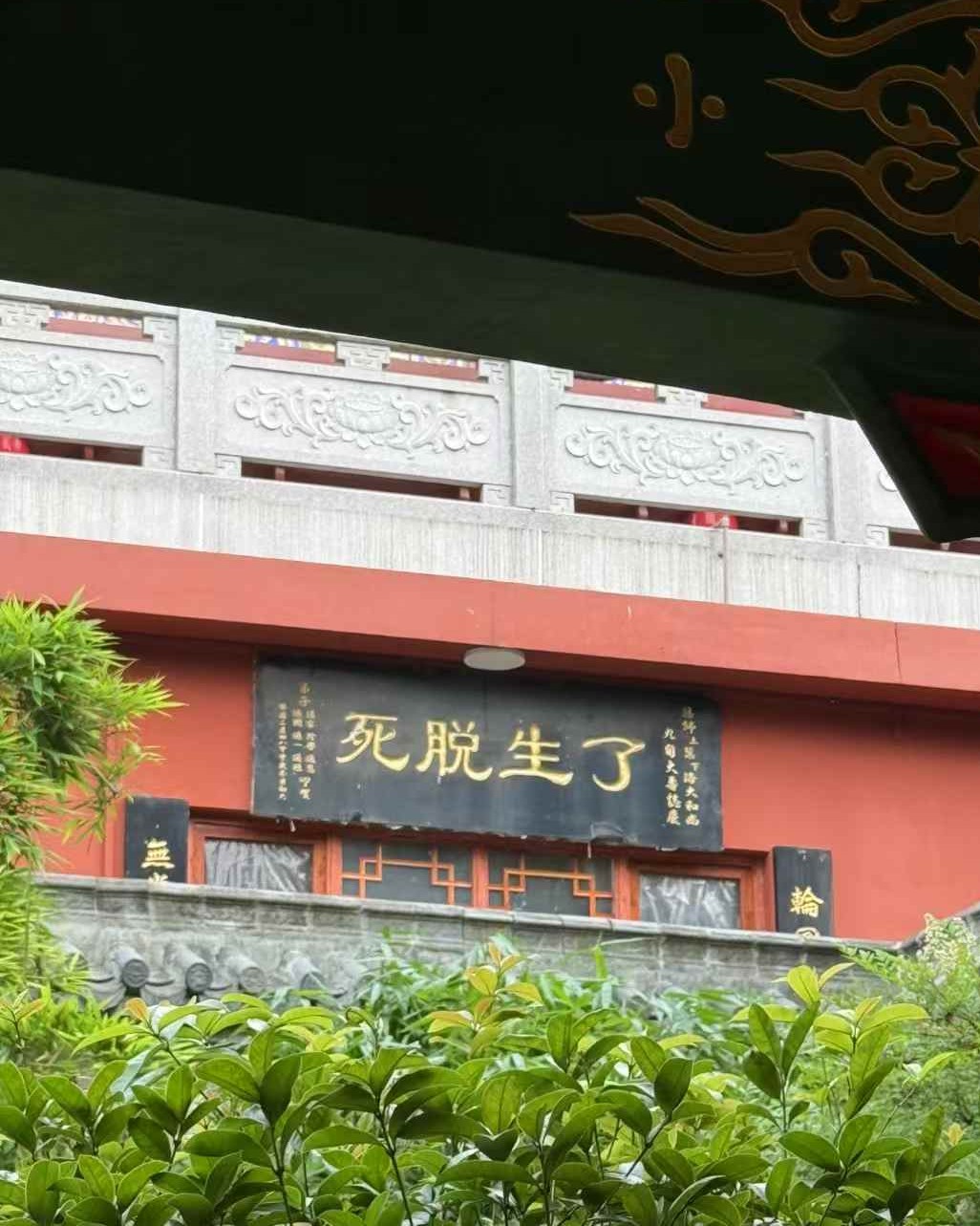
寺庙最是热闹无比的大型交易现场,香客各个摩拳擦掌,人口攒动,香火也鳞次栉比,按价钱排起坐来,三柱香是标配,最少四殿十二香,你拾阶而上,拜完了弥勒拜观应,再四顾一下旁殿的四大金刚,还不忘扫一眼功德箱上的二维码,最后来到大雄宝殿,跨过门槛见到了须弥座上的如来佛,这时一旁的工作人员正忙着给人发红签,两块钱一签。出门左转,在移步换景中你忽然发现了一块牌匾,上面赫然写着“了生脱死”,这时你体会到佛堂的另一个世界。
鲁智深在征方腊前去了一趟五台山,智真长老给了他四句偈语:“逢夏而擒,遇腊而执,听潮而圆,见信而寂。”鲁智深当时不解其意,后来却一一应验:擒于夏,执于腊,最终在钱塘江畔,听潮声拍岸,沐浴更衣,端坐而化。鲁智深并非勤于修行,也谈不上功德圆满,更像是在尘世的喧闹中,忽然看清了自己的归处。
寺庙正是这样的所在。它不刻意排除欲望,反而容纳香火、功德与人心的算计;在最人间的交易往来里,反倒保留着通向超脱的缝隙。像鲁智深这样“不修善果”的莽汉,也无需理性推演,便能在喧嚣之间,偶然撞见“了生脱死”的一刻。
***